
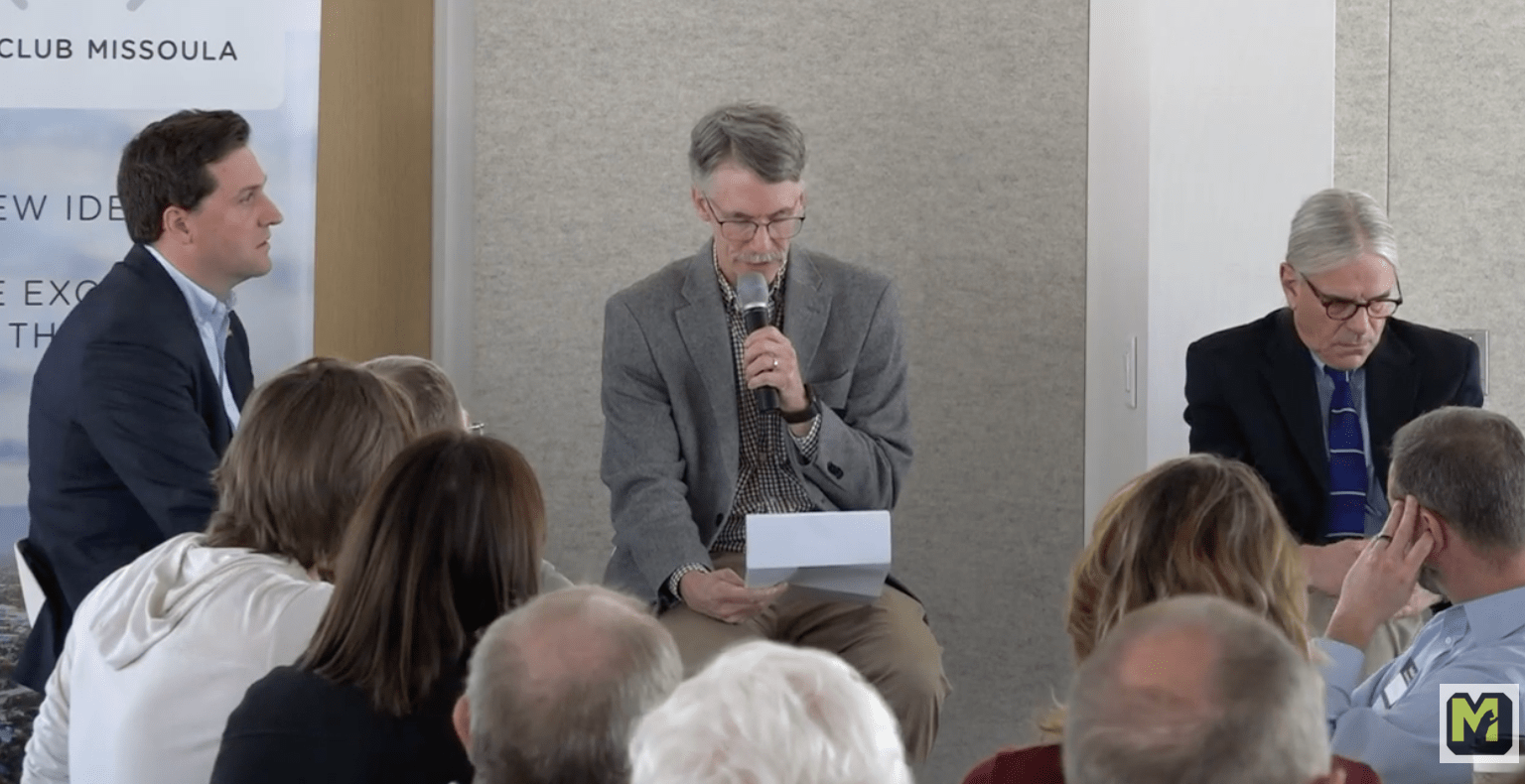
A City Club debate over Missoula’s use of Tax Increment Financing turned contentious Monday when TIF critic Jesse Ramos, a former Ward 4 city councilor, faced off against Karl Englund, chair of the Missoula Redevelopment Agency board.
According to blogger Travis Mateer, who covered the debate for ZoomChron, Ramos proposed a significant reform: restricting TIF funding to its original statutory purpose of addressing blight in districts where property values are actually declining.
“Just tie the use of funds to districts with declining property values,” Mateer quoted Ramos as saying. “If the property value in the TIF isn’t declining, no money.”
The debate revealed tensions over remittance—the practice of MRA returning captured tax revenue to the city’s general fund when the city faces budget shortfalls. When asked about remittance, Englund reportedly struggled to articulate a defense, saying the MRA board viewed such payouts as distractions from their project pipeline. Ramos countered that remittance was the “best tell” that Tax Increment Financing wasn’t working.
A key factual dispute emerged when Englund claimed it was nearly impossible to pass bonds extending the duration of TIF districts. Ramos responded by citing Missoula Urban Renewal District 3, which was originally set to sunset in 2015 but was extended to 2040 through a bond passed by City Council to fund a walking bridge over Reserve Street.
The debate, which Mateer describes as a clear win for the TIF critic, included a telling moment when Englund turned to Mayor Andrea Davis for help when asked what he would change about Tax Increment Financing—suggesting the MRA board chair doesn’t believe the system needs reform at all.
Tax Increment Financing allows the Missoula Redevelopment Agency to capture property tax revenue increases from designated urban renewal districts that would otherwise go to the city’s general fund. Under state law, TIF is intended to address blight in areas with declining property values, but critics argue MRA continues directing tax revenue to districts experiencing rising property values—starving the general fund while enriching areas that no longer need special intervention.