
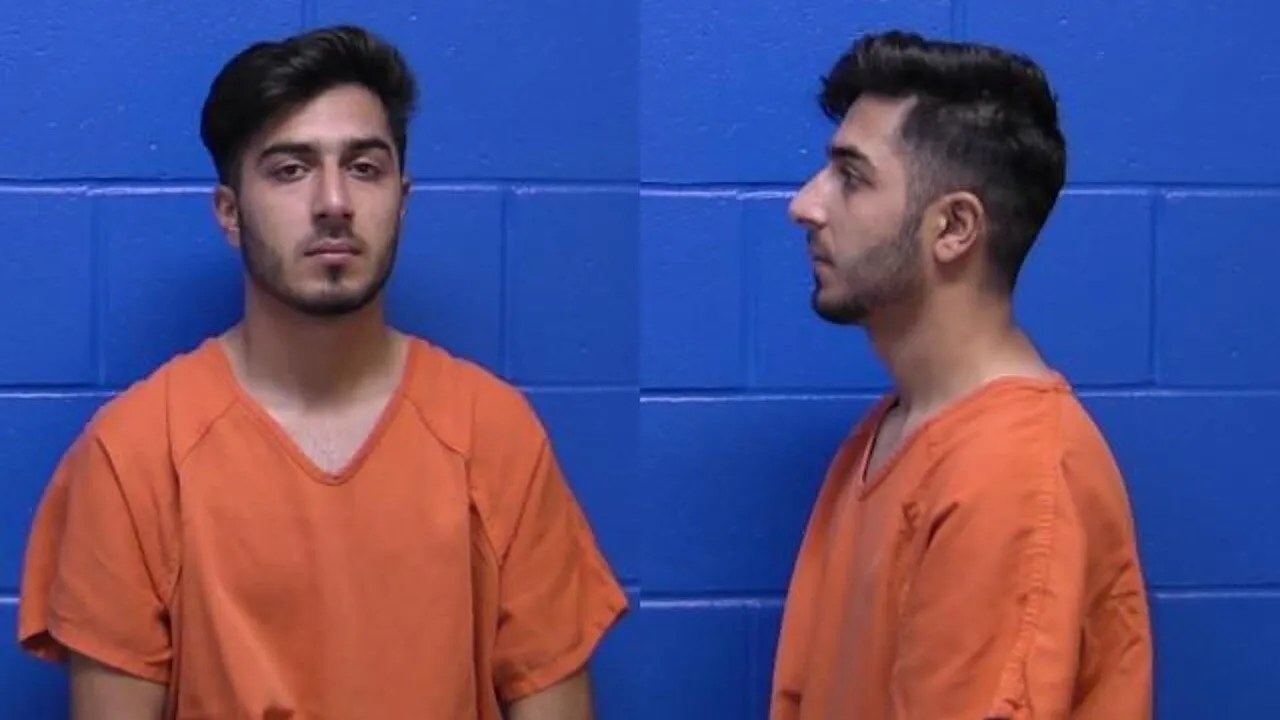
MISSOULA — Days after an Afghan national shot two National Guard members near the White House—killing a 20-year-old woman^1—the Department of Homeland Security turned its attention to other Afghan evacuees, including a man convicted of sexual assault in Missoula four years ago.
“Zabihullah Mohmand, an Afghan national who was resettled in Montana by the Biden administration, was charged with the rape of a teenage girl in a Missoula motel room,” DHS posted Nov. 29, featuring his mugshot as part of a thread promising to deport criminals who “should not be here at all.”
The post came three months after a federal appeals court overturned an immigration judge’s decision to deny Mohmand asylum, finding he was denied a fair hearing. The Ninth Circuit ordered a new proceeding where Mohmand will get another chance to fight deportation.
The Nov. 26 attack that killed National Guard Specialist Sarah Beckstrom and critically wounded Staff Sgt. Andrew Wolfe intensified national scrutiny of Afghan resettlement. The suspect, Rahmanullah Lakanwal, had worked with the CIA in Afghanistan^2 and was granted asylum under the Trump administration in April^3.
The Montana Case
Mohmand was arrested in Missoula on Oct. 17, 2021, after an 18-year-old woman reported she had been raped at the Residence Inn by Marriott. According to charging documents^4, the woman met Mohmand at the Badlander bar downtown. They left to look for a house party, but when they couldn’t find one, Mohmand invited her back to his hotel room, where she said he sexually assaulted her.
Mohmand told police the sexual encounter was consensual and that the woman “wanted him very badly.”^5
He was initially charged with felony sexual intercourse without consent, which carries a sentence of up to life in prison. But in July 2022, prosecutors accepted an Alford plea to misdemeanor sexual assault^6. Under an Alford plea, a defendant does not admit guilt but acknowledges prosecutors have enough evidence to secure a conviction.
A Missoula judge sentenced Mohmand to 100 days in custody. With credit for time already served, he was released.
Immigration Proceedings
The conviction triggered immigration proceedings. An immigration judge determined the misdemeanor sexual assault was a “particularly serious crime” under federal immigration law—a designation that bars an individual from receiving asylum or withholding of removal, even if they face persecution in their home country.
The Board of Immigration Appeals upheld the decision. Mohmand’s attorneys, Kari Hong and Shannon Marie Johnson, appealed to the Ninth Circuit Court of Appeals.
The Court’s Decision
In an Aug. 5 ruling, a three-judge panel reversed the BIA’s decision and sent the case back to the immigration judge for a new hearing.
The court found the government violated Mohmand’s due process rights by relying on a probable cause affidavit from the criminal case without giving him an opportunity to cross-examine the witness whose statements were used against him.
“The government deprives the alien of a fundamentally fair hearing when it fails ‘to make a good faith effort to afford the alien a reasonable opportunity to confront and to cross-examine the witness against him,’” the court wrote, citing precedent.
The BIA had “credited the affidavit over Mohmand’s testimony” when determining the facts and circumstances of the conviction involved the use of force, the court noted. The failure to require the government to present the witness for cross-examination “amounted to prejudicial error.”
On remand, both sides may present new evidence. The immigration judge “may consider ‘all reliable information,’ including ‘information outside the confines of a record of conviction,’ so long as it ‘is probative and its admission is fundamentally fair,’” according to the ruling.
The court declined to address whether the BIA erred by not separately considering whether Mohmand poses a danger to the community.
Political Battle Over Vetting
When Mohmand was arrested in 2021, his case became a political flashpoint. He was one of 20 Afghan evacuees resettled in Montana^7 as part of the federal Afghan Placement and Assistance Program following the U.S. withdrawal from Afghanistan.
Gov. Greg Gianforte and Sen. Steve Daines called on President Joe Biden to halt Afghan resettlements to Montana, questioning whether evacuees were being properly vetted.
“While I welcome our fully-vetted Afghan allies to Montana, this situation and others across the country raise serious concerns about whether the Biden administration is meeting its obligations to fully vet Afghans prior to resettlement,” Gianforte said at the time^8.
In response, Secretary of State Antony Blinken and Homeland Security Secretary Alejandro Mayorkas sent a letter to Sen. Jon Tester’s office defending the vetting process^9.
“Mohmand completed the rigorous and multi-layered screening and vetting process,” the letter stated. “Prior to being granted entry into the United States, no derogatory information, including a criminal record, was identified.”
The process included vetting by the Department of Defense, Homeland Security, the FBI, the National Counterterrorism Center and other intelligence agencies, the letter said.
What Happens Next
The case now returns to an immigration judge for a new open-record hearing. Both the government and Mohmand’s legal team will have the opportunity to present evidence about whether his conviction constitutes a particularly serious crime that should bar him from asylum.
If the immigration judge again finds the crime was particularly serious, Mohmand could be subject to removal to Afghanistan. If not, he may be eligible for asylum or other forms of relief from deportation.
The Ninth Circuit’s ruling is a memorandum decision, which means it is not precedential and applies only to Mohmand’s case.
Comments
One response to “DHS Highlights Missoula Sexual Assault Case in Afghan Vetting Criticism”
Marriage certificate for butte-ugly Ilhan Omar and her brother surfaces with documents appearing to show that the brother/sister duo got married.
https://www.facebook.com/vonvon.me/posts/marriage-certificate-for-ilhan-omar-and-her-brother-surfaces-with-documents-appe/1225344132961136/