
While House District 69 Representative Ken Walsh sponsored HB 680, it passed with overwhelming support from the Legislature, making it a mistake shared by many that never should have happened.
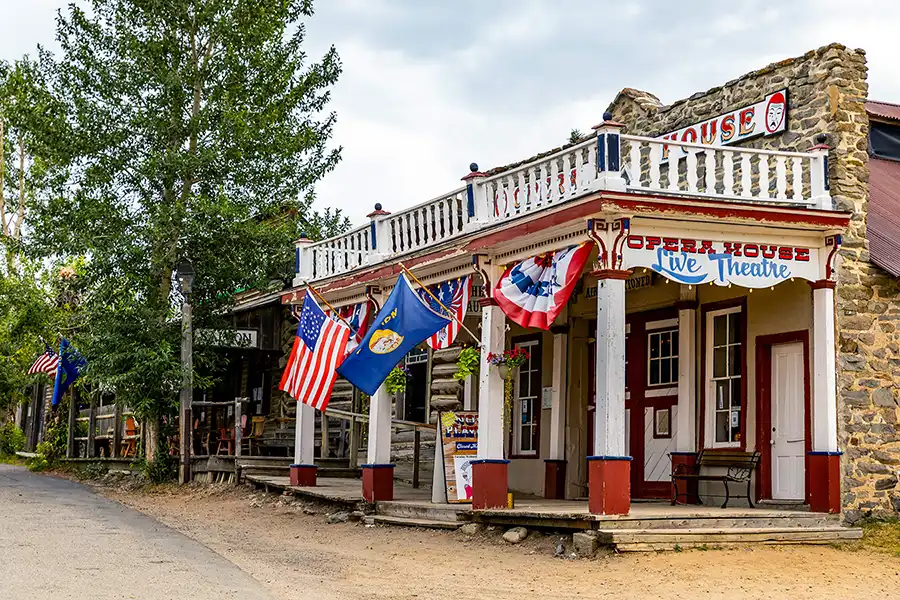
HB 680 changes how Montana treats two of its most important historic places: Virginia City and Nevada City. These towns are not just state-owned property. They are living parts of Montana’s story, held in trust for future generations. HB 680 breaks that trust.
The bill allows the state to enter into 99-year lease agreements. In simple terms, that gives private operators control of Virginia City and Nevada City for nearly a century. That kind of control lasts longer than most Montanans alive today will ever see. It also comes with very little public oversight.
HB 680 also weakens review standards for construction and repairs. This creates a real risk that development could change the historic character of these towns. Once that character is lost, it cannot be brought back. A modern tourist destination is not the same as a preserved historic town.
The bill goes even further. It allows large construction projects costing more than $300,000 to move forward without legislative approval. All a project has to claim is that a delay could cause “damage.” That wording is unclear and easy to misuse. It allows major changes to happen with little transparency and almost no oversight.
Local voices are pushed aside as well. While HB 680 requires public hearings, it allows the governing commission to ignore public input. That means Montanans can speak, but their concerns do not have to be considered. People who live near these towns, work in them, or care deeply about them are left without a real say.
HB 680 also removes important taxpayer protections. The bill allows the state to bypass Montana’s Title 18 procurement laws and avoid competitive bidding. These laws exist to prevent favoritism, inflated costs, and backroom deals. When the government negotiates private agreements behind closed doors, taxpayers usually pay more.
Supporters of HB 680 argue that the state cannot afford to maintain Virginia City and Nevada City without outside investment. They claim the bill improves preservation. In reality, it does the opposite. HB 680 increases the risk of privatization and shifts control from the public to private interests. Those interests may not share Montana’s values of preservation, authenticity, and public access.
Virginia City and Nevada City belong to the people of Montana. They do not belong to political commissions or private companies. Once control is handed over for 99 years, there is no practical way to undo the damage.
The Legislature made a mistake with HB 680. The good news is that mistakes can be fixed. During the 2027 legislative session, Montana lawmakers should repeal HB 680 and restore transparency, accountability, and public oversight of these historic towns.
Comments
3 responses to “HB 680 — A Bad Deal for Montana’s Historic Treasures”
Overwhelming support? I’d say. That’s accurate, even though much of the rest of this piece is disingenuous and deceptive.
When the House votes 96-3 in favor of legislation and the Senate follows with a majority of 45-4, it must be assumed that there is more to see here than what is presented in Trevor Walter’s opinion. Full disclosure: All the Senate “NO” votes were Republican while all the House “NO” votes were Democrat. Obviously, this was not a partisan issue, but one of concern to all.
I have looked into this and determined that the only thing which changed substantially was the increase in the years of lease from 20 years to 99 years. Everything else stays the same. That being said, it is apparent that the Legislature is more concerned about making sure that the properties in question, Virginia City and Nevada City, are maintained properly rather than allowed to simply run down, deteriorate, and disintegrate over time.
The fact remains that without outside money coming in and investing in these so-called “state treasures”, they will dry up and blow away, as so many other similar ventures have. Ghost Towns are not uncommon in Montana and, without intervention, Virginia City and Nevada City, will join them. That intervention, such as it is, seems to be sanctioned by the state legislature, which recognizes one thing–the taxpayers of Montana cannot be relied on to maintain these relics and, therefore, they must be opened up to privatized investments. Moreover, these investments must be guaranteed that they will, at the very least, have a chance of recuperating their initial investment. If there is no chance they can recoup their investment AND realize a profit, they simply will not commit and the infrastructure in these locations will go from bad to worse and eventually, both will become, in actuality, ghost towns.
Surely, Trevor Walter, as a multi-generational business person (see his bio), understands this precept. If not, then he has no business (pardon the pun) running to manage the people’s business.
When staunch conservatives and die-hard progressives can agree on a solution, it must be assumed that reality has reared its ugly head and everyone recognizes it for what it is.
Ultimately, what is shown in this scenario is that coerced Statist measures cannot succeed, but must rely on its anathema: profit-driven free-enterprise.